South Africa has excellent sunshine levels, making it an ideal environment for Solar Power systems and a strong alternative to traditional energy sources.
Correctly sizing your solar panel array is a crucial step in designing an efficient solar power setup.
You may already know which inverter you want, but how do you determine the right number of solar panels?
Fortunately, the process is straightforward.

Section 1
The fundamentals
Your inverter plays a key role in determining how your solar panel array should be sized.
Before we get into the technical details, it helps to first cover a few basic concepts.
If you’re not very confident with electrical terms (I wasn’t at first either), this introduction will make things much easier to understand.
This section is designed specifically for beginners.
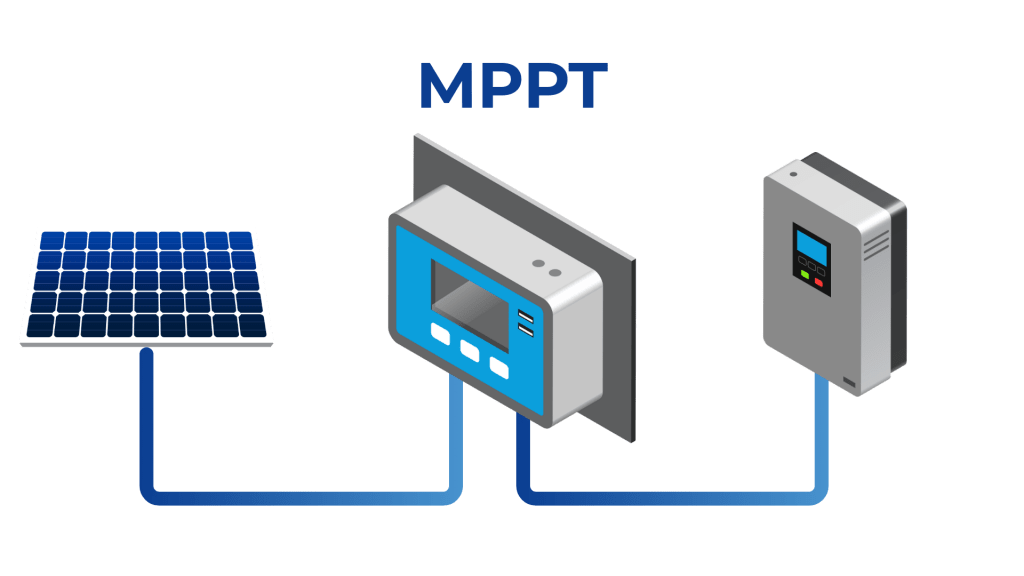
A MPPT monitors the voltage coming from your solar panel array and ensures the system produces maximum possible energy at all times.
Wattage measures how much electricity is being produced or consumed. ( a measurement of electricity)
Voltage measures the speed or pressure of electricity flowing through a circuit. (rate at which electricity travels)
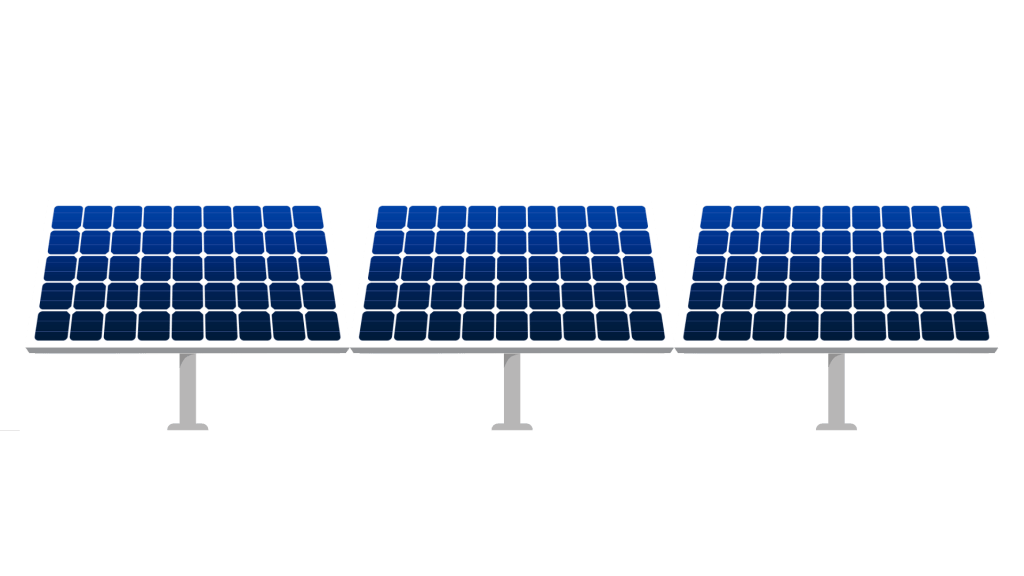
This is your complete solar panel setup that captures sunlight and converts it into electricity.
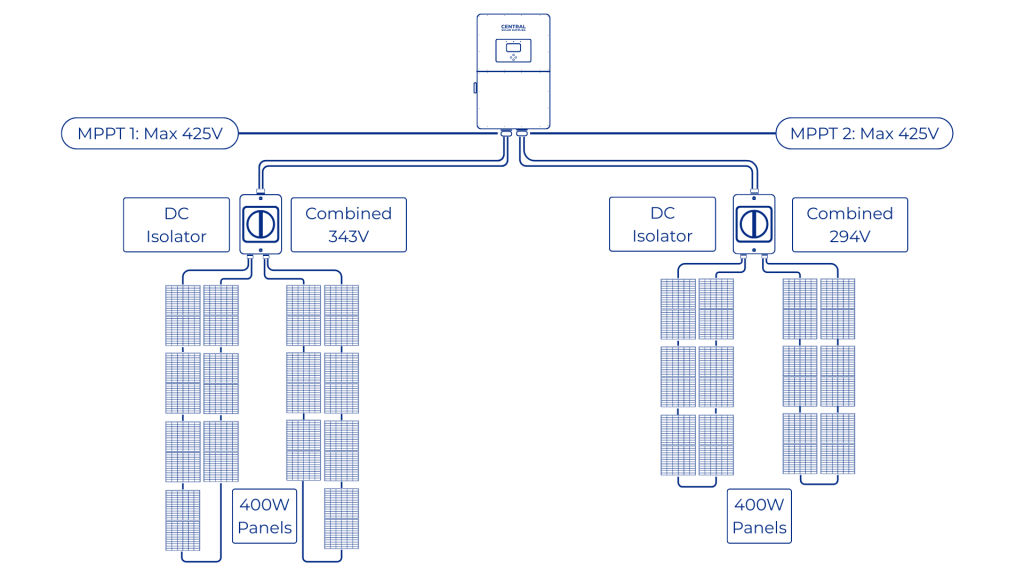
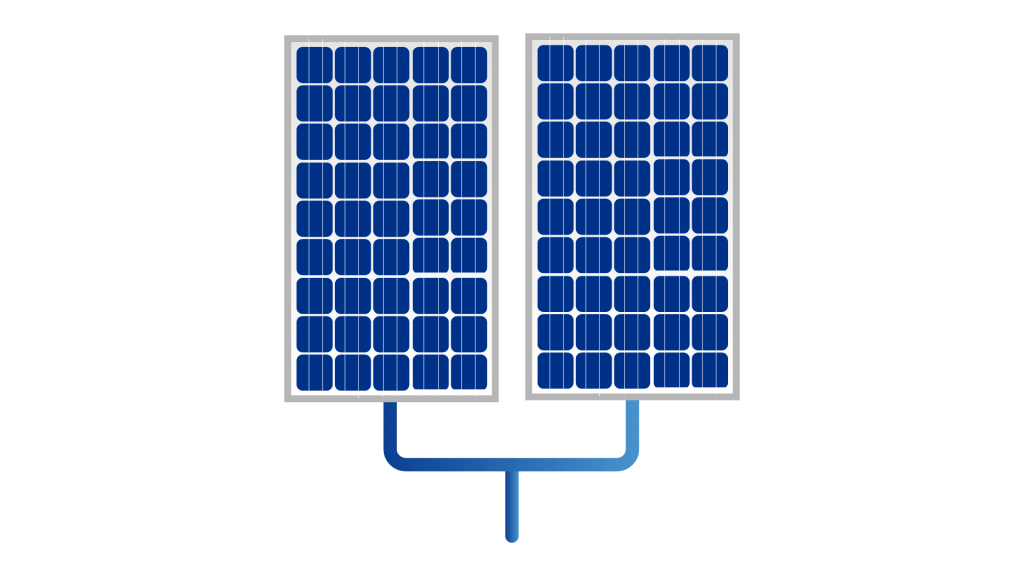
A PV string is a group of solar panels connected in series where the combined voltage stays within the inverter’s MPPT range.
Connecting panels in parallel increases the current (amps) while keeping the voltage the same.
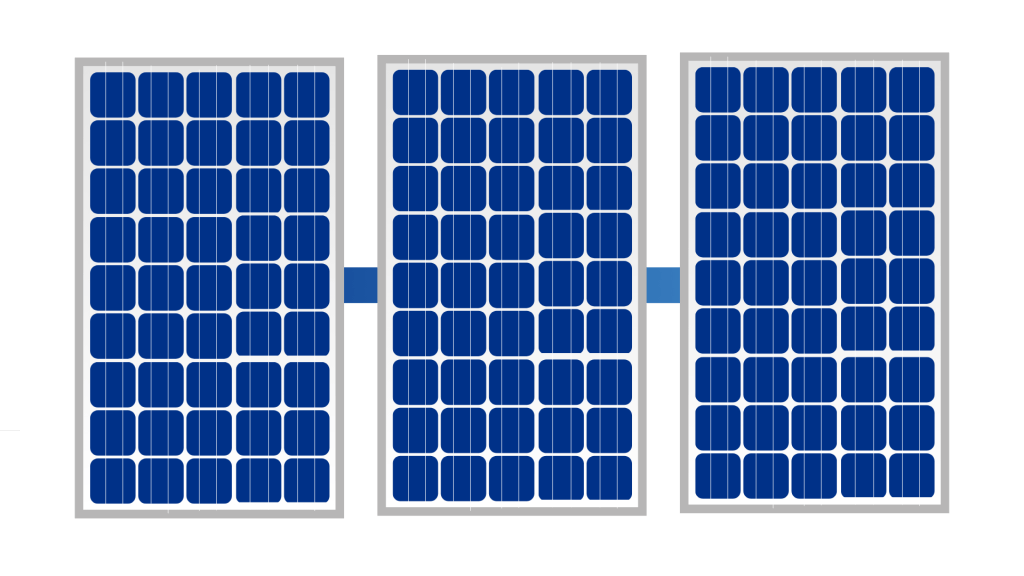
Connecting panels in series increases the voltage while the current (amps) stays the same.
Section 2
The Fundamentals
Let’s take a closer look at how to size a solar panel array using your inverter’s solar charger specifications.
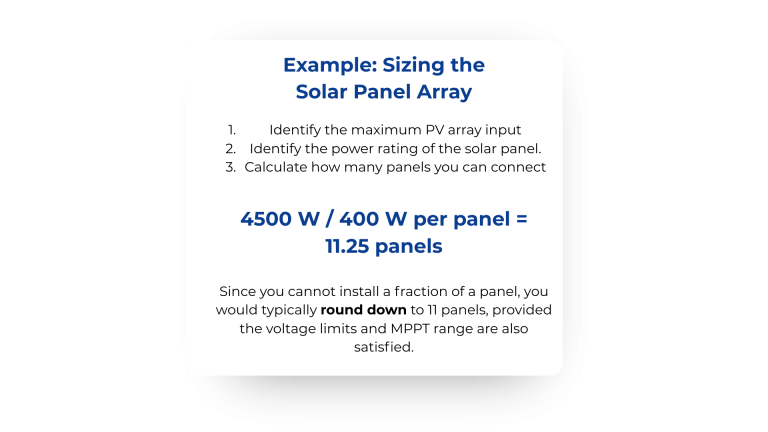
On the inverter datasheet, find the values for Maximum PV Input and MPPT Voltage Range.
On the solar panel datasheet, find the Maximum Power (W) rating and the Open-Circuit Voltage (Voc).
Use these values to size your PV array as shown below.
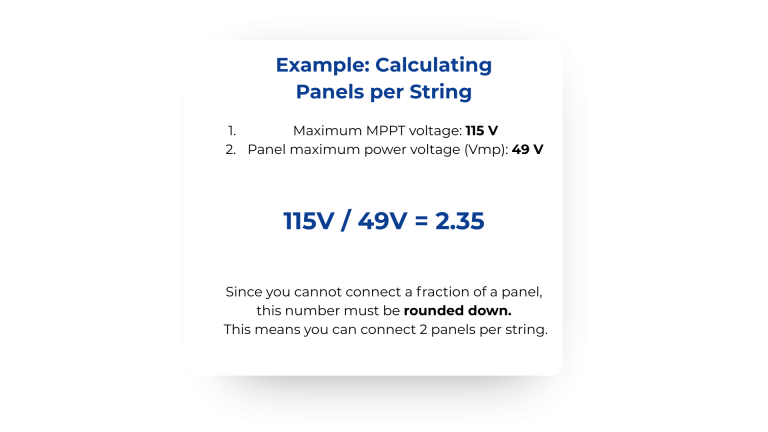
The final step is to determine how many solar panels can be connected in a single string.
To do this, check the maximum MPPT voltage range on your inverter datasheet. Then divide this value by the maximum power voltage (Vmp) of the solar panel.
This calculation will tell you how many panels are allowed per string.
Explore our Solar Panel Guide for a complete breakdown of how solar panels work and how to choose the right ones.