

Section 1
The fundamentals
Before diving in, we’ll quickly go over some basic concepts.
Readers familiar with solar system terminology can skip this part.
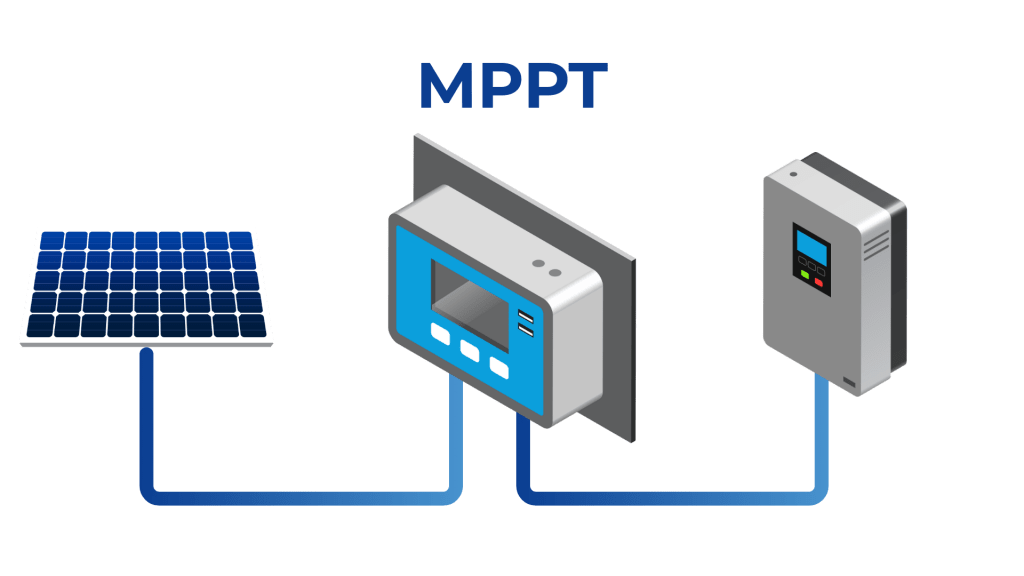
A MPPT monitors the voltage coming from your solar panel array and ensures the system produces maximum possible energy at all times.
Photovoltaic simply means turning sunlight into electricity. The word combines phōs, meaning light, and volt, which relates to electrical power.

This is your complete solar panel setup that captures sunlight and converts it into electricity.
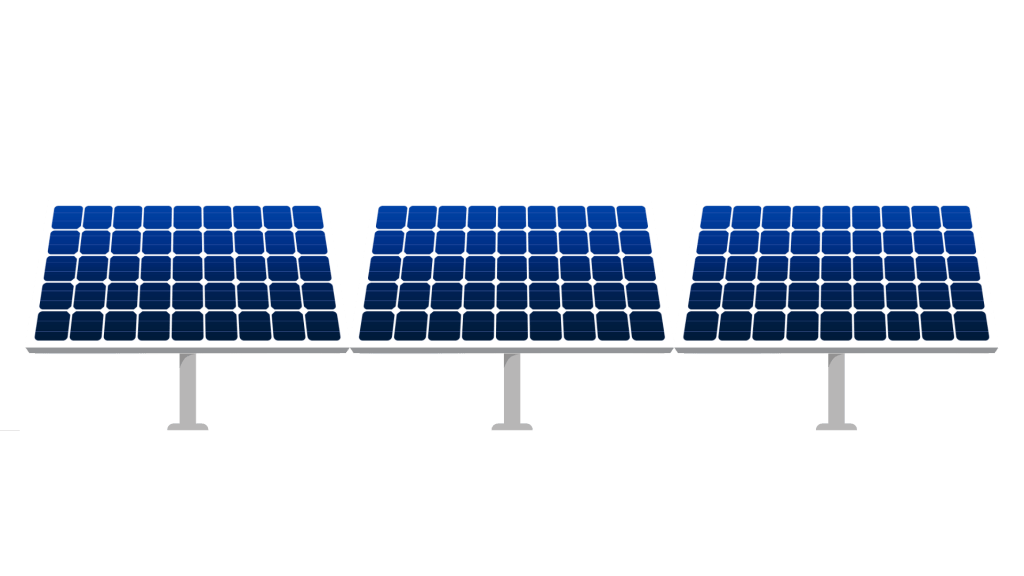
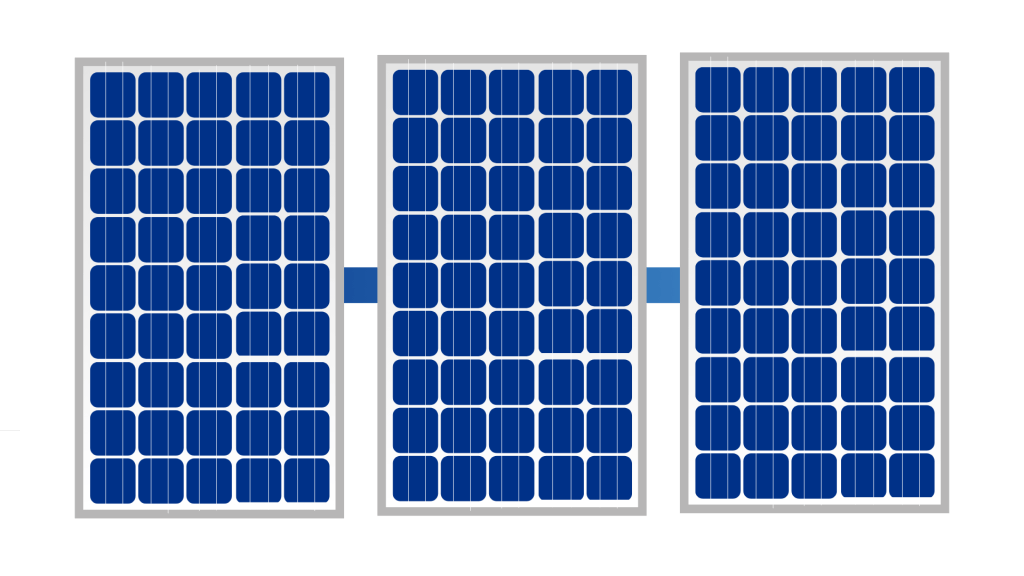
A PV string is a group of solar panels connected in series where the combined voltage stays within the inverter’s MPPT range.
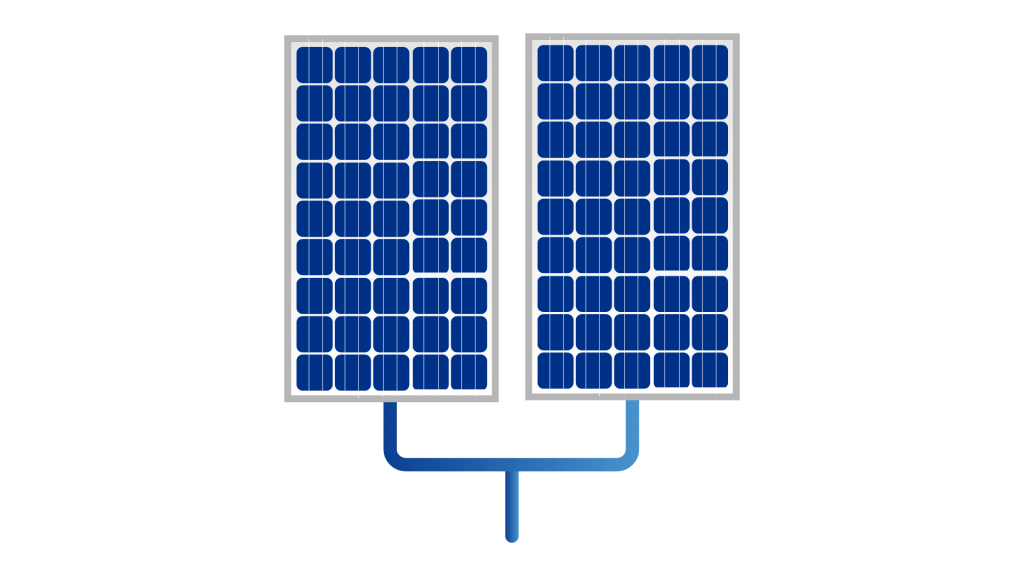
Connecting panels in parallel increases the current (amps) while keeping the voltage the same.
Section 2
A simple explanation
To understand how solar panels generate electricity, it helps to know that each panel is made up of layers known as N-type and P-type material. These layers work together to create an electric flow when exposed to sunlight.
Rather than diving into complex physics, here’s a simple explanation of what’s happening.
If this still feels a bit overwhelming, don’t worry — tools like EnergyBee can simplify the process and help you understand how a solar system works based on your specific needs.
When sunlight hits a solar panel, tiny particles of light called photons strike the solar cells. These photons knock electrons loose inside the panel, allowing them to move through a circuit.
As electrons move from the N-type layer to fill gaps in the P-type layer, an electrical current is created. This movement of electrons is what produces usable electricity.
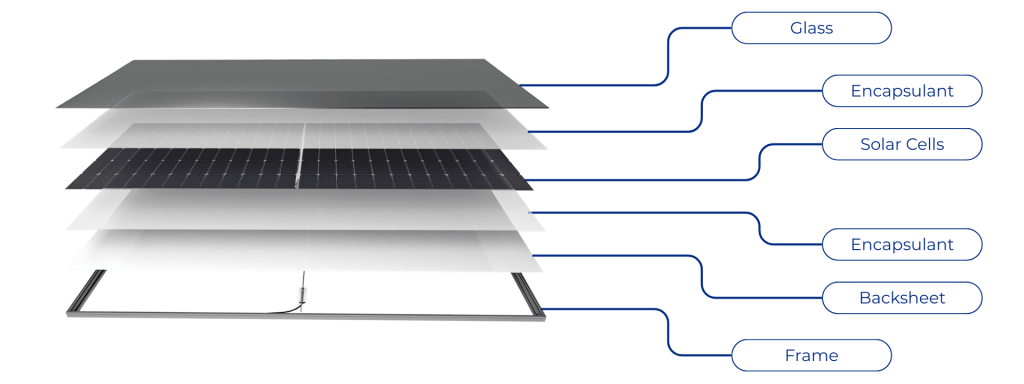
Solar panels are made up of several components, but the most important part is the solar cell.
Solar cells are manufactured from silicon, one of the most abundant elements on Earth. Through a specialised production process, silicon is formed into one of two cell types:
Monocrystalline solar cells – made from single, uniform silicon crystals
Polycrystalline solar cells – made from multiple silicon fragments fused together
Both types convert sunlight into electricity, but they differ in appearance, efficiency, and cost.
Section 3
The differences
Solar panels are made up of several components, but the most important part is the solar cell.
Solar cells are manufactured from silicon, one of the most abundant elements on Earth. Through a specialized production process, silicon is formed into one of two cell types:
Monocrystalline solar cells – made from single, uniform silicon crystals
Polycrystalline solar cells – made from multiple silicon fragments fused together
Both types convert sunlight into electricity, but they differ in appearance, efficiency, and cost.
Monocrystalline panels are manufactured from a single, continuous silicon crystal. This makes them the oldest and most established solar cell technology. They are easily recognizable by their uniform, dark appearance.
Because of their higher efficiency, fewer panels are needed to produce the same amount of power — making them ideal where space is limited.

Polycrystalline panels are made from multiple silicon fragments fused together, giving them a more textured, non-uniform appearance. This technology was developed to reduce manufacturing waste and lower production costs.
They generally offer the lowest cost per watt. While slightly less efficient, modern polycrystalline panels continue to improve in performance.

Section 4
Choosing the Right Solar Panel Size
Your individual energy needs and available space will determine which solar panel size is best for you.
If you have limited roof or ground space, higher-rated panels (for example, 400 W panels) are usually the better option, as they produce more power per panel.
If space is not an issue, you can opt for a larger number of lower-rated panels to reach your required output.
That said, if you plan to expand your system in the future, higher-rated panels are often the smarter choice. Larger panels are more likely to remain available over time, making future upgrades easier.
Want Help Sizing Your Array?
Section 5
Choosing the Right Solar Panel Size
One of the most important considerations when installing solar panels is how well they work with your roof. This depends on several factors, including roof size, shape, angle, orientation, and structural condition.
Roofs with simple shapes are easier and more cost-effective to work with. Complex roofs can still support solar panels, but they usually require custom mounting solutions, additional labour, and longer installation times.
To maximise energy production, panels should face the same direction and be installed at the correct angle. Complex roofs may increase installation costs due to specialised mounting hardware and labour.

For optimal performance, solar panels should face the sun for most of the day.
If your roof does not face the ideal direction, you can still benefit from solar by installing two separate arrays — one for morning sun and one for afternoon sun.
A qualified installer will be able to recommend the best configuration for your home.

In South Africa, most homes have tiled pitched roofs, which are ideal for solar installations. Corrugated metal roofs also work well.
Thatched roofs, however, are not suitable due to fire risk.
Flat roofs can support solar panels too, but they require specialised mounting structures to angle the panels correctly.

Solar panels rely on direct sunlight, so shading should be kept to a minimum. Obstructions such as trees, chimneys, and nearby buildings can reduce system performance.
Minor shading can often be managed by trimming trees or using optimisers. A solar installer will assess shading and recommend solutions where possible.

Roofs have a lifespan and a maximum load they can safely support. Before installing solar panels, it’s important to assess the roof’s condition and structural integrity.
An experienced installer or structural professional can help determine whether any reinforcements are needed.

Section 6
How Solar Panels Work Within a Complete System
Solar panels don’t operate on their own. They’re just one piece of a larger solar power system, and without the right supporting components, they can’t supply usable electricity to your home or business.
To turn sunlight into power you can actually use, your solar panels must work together with the following key components:
Batteries are not strictly required for a solar system to function, but they dramatically increase its usefulness.
Without batteries, your system will only use solar power while the sun is shining. Any excess energy produced during the day is either lost or sent back to the grid, depending on your setup.
In South Africa, ongoing load shedding has made batteries a popular — and often essential — addition. Batteries store excess solar energy so you can use it later, such as at night or during power outages.
If you’re away during the day and consume most of your electricity in the evenings, batteries are a smart investment. They allow you to rely on your solar system when you need it most.
The inverter is one of the most critical parts of any solar installation. Its main job is to convert the electricity produced by your solar panels from DC (direct current) into AC (alternating current) — the type of power used by household appliances.
Your solar panels generate DC power, and your batteries store DC power. Without an inverter, none of that energy would be usable inside your home.
Many modern, plug-and-play inverters include a built-in MPPT (Maximum Power Point Tracker). This allows the inverter to optimise the power coming from your solar panels automatically, making installation faster and system performance more efficient.